
Balance Sheet
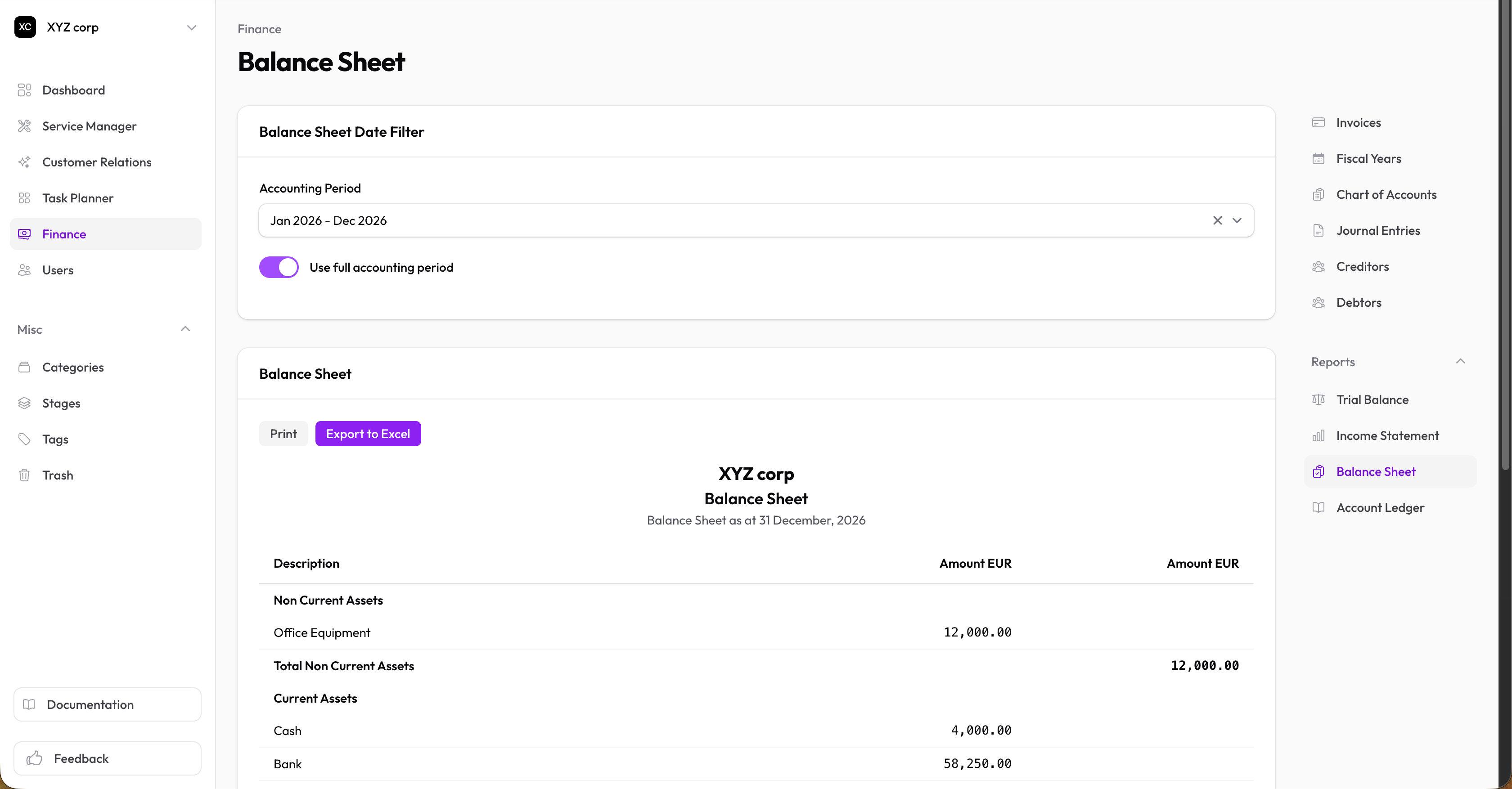
The balance sheet shows your organization's financial position at a point in time—what you own, what you owe, and your net worth.
Accessing the Report
Go to Finance → Reports → Balance Sheet
Reading the Report
Assets (What You Own)
Current Assets — Short-term (within one year):
- Cash
- Accounts Receivable
- Inventory
- Prepaid Expenses
Non-Current Assets — Long-term:
- Property
- Equipment
- Investments
Total Assets = Current + Non-Current Assets
Liabilities (What You Owe)
Current Liabilities — Due within one year:
- Accounts Payable
- Short-term Loans
- Accrued Expenses
Non-Current Liabilities — Due beyond one year:
- Long-term Loans
- Bonds Payable
Total Liabilities = Current + Non-Current Liabilities
Equity (Net Worth)
- Owner's Capital
- Retained Earnings
- Current Period Net Income
Total Equity = Capital + Retained Earnings
The Accounting Equation
The balance sheet must always balance:
Assets = Liabilities + Equity
If it doesn't balance, there's an error in your books.
Key Metrics
| Metric | Formula | Meaning |
|---|---|---|
| Working Capital | Current Assets − Current Liabilities | Short-term financial health |
| Net Assets | Total Assets − Total Liabilities | What's left for owners |
Filtering
Select a Fiscal Year to view the balance sheet as of that period's end.
When to Use
Review the balance sheet:
- At period-end for financial position
- When applying for loans
- For investor reporting
- When making major financial decisions